

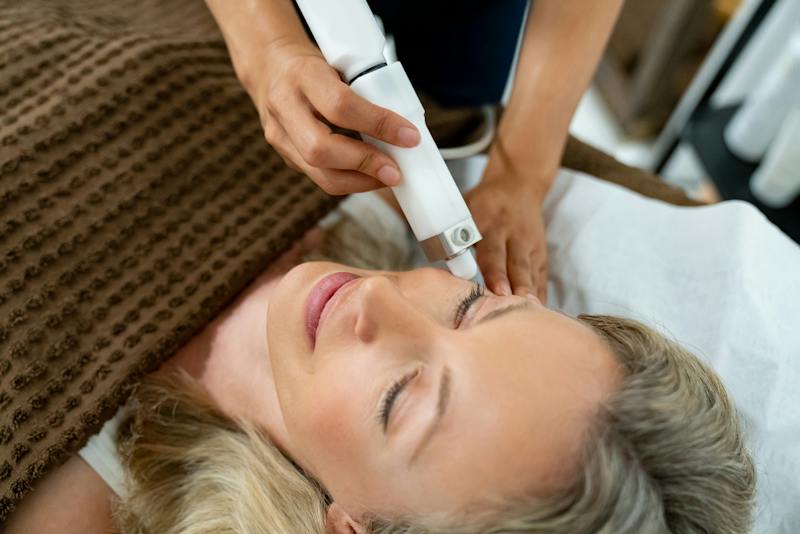
A chemical peel can soften fine lines and improve some moderate wrinkles, but it rarely removes wrinkles completely. How much improvement you see depends on two things: the depth of the peel and the type of wrinkle. Lines caused by sun damage and rough texture respond well. Deep creases, expression lines, and sagging skin usually need a different or additional treatment.
At the Morgenstern Center for Orbital & Facial Plastic Surgery, patients considering a chemical peel in Wayne and Lancaster, PA, are cared for by a team led by Dr. Kenneth Morgenstern, MD, FACS. Dr. Morgenstern is board-certified by the American Board of Ophthalmology, a Fellow of the American College of Surgeons, and a Fellow of the American Academy of Facial Plastic and Reconstructive Surgery. He brings more than two decades of experience in facial and oculofacial surgery.
In this blog, Dr. Morgenstern and his team explain what chemical peels can realistically do for wrinkles. They also cover how peel depth affects results and when another treatment may be better for you.
How a Chemical Peel Works on Wrinkles
A chemical peel works by applying a solution that removes the outer layer of aged skin. According to the American Society for Dermatologic Surgery (ASDS), this process creates a controlled wound. The new skin that grows in its place is usually smoother and less wrinkled.
ASDS lists several acids commonly used in peel solutions:
- Glycolic acid
- Lactic acid
- Salicylic acid
- Trichloroacetic acid (TCA)
- Carbolic acid (phenol)
Each acid reaches a different depth in the skin. That depth, more than any other factor, determines how much a peel can do for wrinkles.
Which Wrinkles Respond Best to a Chemical Peel?
Chemical peels work best on wrinkles that sit in the surface layers of the skin. The wrinkles and concerns most likely to improve include:
- Fine lines from sun exposure: Shallow lines caused by UV damage often soften noticeably.
- Crepey texture: Thin, crinkled skin can look smoother and more even.
- Dull or weathered skin: Surface lines that make skin look tired often fade as fresh skin grows in.
- Lines around the lips: Deeper peels can improve more established lines, such as vertical lip lines.
Other wrinkles have causes that sit below the surface, so a peel cannot fully reach them. For example:
- Lines formed by repeated muscle movement, such as frown lines and crow's feet, return as long as those muscles stay active
- Folds caused by lost volume, such as nasolabial folds, require structural support that a peel cannot provide
Light, Medium, and Deep Chemical Peels Compared
Chemical peels come in three depths, and deeper peels produce more dramatic results with a longer recovery.
| Feature | Light Peel | Medium Peel | Deep Peel |
| Depth | Outermost layer of skin only | Into the upper dermis, the skin's middle layer | Deeper than a medium peel |
| Concerns treated | Fine wrinkles, acne, uneven tone, dryness | Wrinkles, acne scars, uneven tone | Deeper wrinkles, scars, precancerous growths |
| Repeat treatments | Every two to five weeks, per Mayo Clinic | Every six to 12 months, per ASDS | Generally not needed |
| Downtime | Least | Moderate | Longest |
| Best suited for | Ongoing maintenance | Established lines and texture concerns | Carefully selected patients with advanced concerns |
The right depth depends on your skin, your goals, and how much recovery time you can plan for.
Chemical Peel vs. Laser Resurfacing for Wrinkles
Chemical peels and laser resurfacing both remove damaged outer skin, but they differ in precision and intensity. Laser resurfacing gives the provider fine control over treatment depth. That control makes laser resurfacing a strong option for addressing deeper wrinkles and texture issues. Chemical peels are often a gentler, more accessible starting point, especially for fine lines and sun damage.
Questions About Chemical Peels for Wrinkles? The Morgenstern Center Team Can Help
Chemical peels at the Morgenstern Center are performed by licensed medical aestheticians who work closely with Dr. Morgenstern. Our team includes:
- Stefani Day, LME, who focuses on corrective and preventative skincare.
- Victoria Dooner, LME, CLT, specializes in customized facials, chemical peels, and other skincare treatments.
- Amanda Vanderbok, a Licensed Esthetician.
- Dana Phillips, LME, CLT, our newest licensed medical aesthetician.
Dr. Morgenstern has been named a Philadelphia Magazine Top Doctor multiple times and holds more than 20 years of experience in facial and oculofacial surgery. He and his team help patients from Philadelphia, the Main Line, and the surrounding region choose treatments that match their goals. To learn whether a chemical peel in Wayne and Lancaster, PA, is right for you, call 610.541.2807 or book your consultation online.
Disclaimer: This information is provided for educational purposes only and does not replace a consultation with a qualified medical provider. Outcomes, risks, and suitability vary from patient to patient.
Sources
- American Society for Dermatologic Surgery. Chemical Peels for Wrinkles
- Mayo Clinic. Chemical Peel
